Bitcoin Blackjack Basics: Rules, Hands and Sensible Play
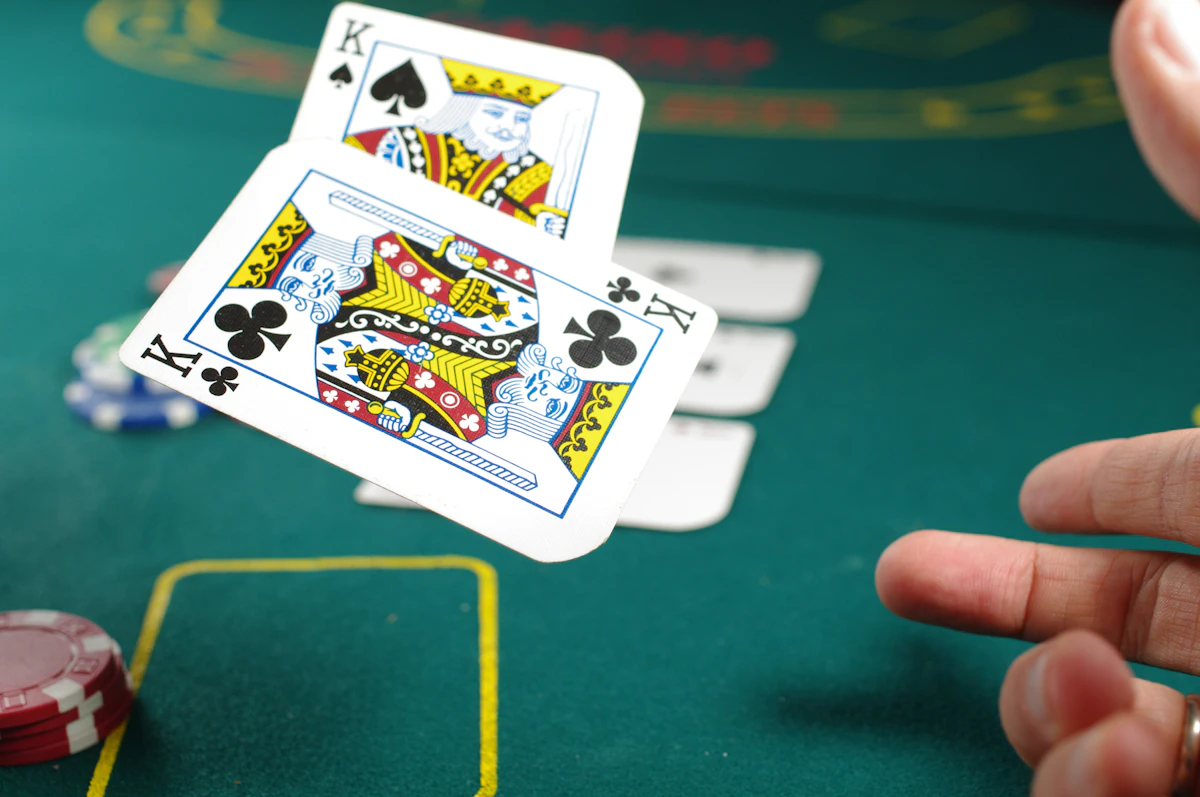
- Primary Signal: Bitcoin Blackjack Basics: Rules, Hands and Sensible Play
- Overview: Blackjack rewards good decisions more than most casino games, but only if you know basic strategy. This guide explains the rules, the core hit, stand, double and split decisions, a...
- Verification: Analyzed and compiled by Lucky Satoshi editorial monitoring desk.
Blackjack is one of the few casino games where your decisions genuinely change the outcome, which is why it attracts players who want more than a spin button. The goal is simple: build a hand closer to 21 than the dealer's hand, without going over. You are not competing against other players, only against the dealer, and the basic rules can be learned in a few minutes. The discipline comes afterwards: knowing when to hit, stand, double, or split, and accepting that even perfect basic strategy still leaves the house with a small edge.
Cards carry their face value, picture cards count as 10, and aces count as 1 or 11, whichever helps the hand more. You and the dealer each start with two cards, with one dealer card face up. You act first, choosing to hit for another card or stand with what you have, and the dealer then plays by fixed rules, usually hitting until reaching 17. If your hand exceeds 21, you bust and lose immediately, even if the dealer would also have busted. A two-card 21, an ace plus a ten-value card, is blackjack and usually pays 3 to 2, though some tables pay only 6 to 5, which is a materially worse deal worth avoiding.
Basic strategy is a mathematically derived set of decisions for every hand against every dealer upcard, and following it cuts the house edge to under 1% on favourable tables. The core rules are easy to remember: always stand on hard 17 or higher; hit hard 12 to 16 when the dealer shows 7 or higher, and stand on those hands when the dealer shows 6 or lower; always split aces and eights; and double down on 11 against most dealer cards, and on 10 when the dealer shows 9 or lower. Soft hands, those containing an ace counted as 11, are more flexible, because they cannot bust with one more card. A basic strategy chart, kept beside you while learning, removes guesswork entirely.
Doubling down lets you double your bet in exchange for exactly one more card, and it is most valuable on strong starting hands such as 11 or 10 against a weak dealer card. Splitting pairs gives you two hands from one, at the cost of an extra bet, and it is essential with aces and eights, while splitting tens or fives is almost always a mistake. Side bets, such as perfect pairs or 21 plus 3, look entertaining but carry a much larger house edge than the main game, often several percent, and are best avoided by players who care about value. Insurance, offered when the dealer shows an ace, is another side bet in disguise and is generally a losing proposition unless you are counting cards, which online games make impractical.
Table choice matters as much as strategy. Look for tables that pay 3 to 2 on blackjack, allow doubling on any two cards, allow splitting and re-splitting, and stand on soft 17, since each favourable rule trims the house edge slightly. Keep bets small relative to your bankroll, because blackjack variance still produces losing streaks even with perfect play, and never increase stakes to recover a losing session. Set a loss limit and a win goal before you sit down, take breaks, and remember that no strategy overcomes the house edge in the long run. Blackjack rewards good decisions, but it remains gambling, so play only with money you can afford to lose.
Basic strategy is worth learning properly rather than approximately, because every deviation from it increases the house edge, and the most common deviations, such as standing on 16 against a strong dealer card or splitting tens, are also the most costly. Keep a strategy chart beside you while you learn, practise at low stakes until the decisions feel automatic, and choose tables that pay 3 to 2 on blackjack with favourable doubling and splitting rules. Treat side bets and insurance as entertainment with a high price rather than as strategy, keep your bankroll separate from money needed elsewhere, and set a loss limit before every session. Blackjack rewards patience and discipline more than daring, and the players who last are usually the ones who make the same correct decision every time, even when it feels wrong.
📖 Continue Reading the Full Story
Continue reading this article on Lucky Satoshi.
⚡ Access Full Content NowMore from Lucky Satoshi



 🐋 CryptoAce VIP
How to Read a Bitcoin Liquidation Heatmap: A Beginner's Guide
What the glowing colors on a liquidation heatmap actually mean, how to spot liquidity magnets step by step, an...
 📈 1UpTrade Live
Bitcoin Mining Electricity Cost: Is It Still Profitable in 2026?
Electricity is 70%+ of mining costs. Learn how to calculate your mining electricity cost, what rates make mini...
 🚀 RocketCoin Casino
Can an AI Receptionist Handle Player Support for a Crypto Casino?
Crypto casinos run all night — and so do player support issues. Here's how an AI voice receptionist answers ev...
 ⚡ LiveCoin Bet
Practical Playbook: Calculadora de Parlay — Odds Combinadas y Premios (Day 9 Guide)
Solving critical challenges with the Calculadora de Parlay — Odds Combinadas y Premios on LiveCoin Bet. Discov...